

Zionism is Jewish Grievance Politics and It Imperils Us All
There has been a dramatic shift in Jewish communal politics over the past two decades. After a half-century long commitment to the Two-State Solution, what once counted as liberal Zionism—a firm commitment to the possibility of peace and opposition to actions forestalling that possibility—is now treated as anti-Zionism. Extreme right-wing Zionism is mainstreamed and establishment Jewish organizations embrace the Kahanist vision of an ethnically cleansed Israel, from the river to the sea. This wasn’t a grassroots evolution. It was a top-down imposition engineered by a donor class that sees Jewish survival only through the lens of ethnic supremacy, not solidarity, justice, or democracy.
Zionism, once imagined as a means for Jewish self-determination, has mutated into a political project that stands in stark opposition to the very values Judaism professes. Today, it is used to justify policies of dispossession, apartheid, and mass violence under the guise of Jewish safety. But what kind of safety demands the sacrifice of our ethics, our allies, and ultimately, our own people?
Zionism increasingly resembles white grievance politics. Both are rooted in victimhood narratives, define themselves in opposition to multiculturalism, and rely on selective readings of history to justify their claims. They are obsessed with maintaining demographic majorities, reject pluralism, and exalt militarism. Guns, walls, and ethnonationalism have become totems. In both movements, there’s a demand to “return” to an imagined past that never existed, built on exclusion and domination. Perhaps we should start calling Zionism “Jewish grievance politics”—so it’s clear that it functions, in many ways, like white grievance politics but directed at the non-Jewish world.
Both ideologies must suppress the honest telling of history to maintain their illusions. In the case of Zionism, that means erasing not only Palestinian narratives but also the long tradition of Jewish dissent—religious and secular—that opposed the ethnonationalist project from its inception.
Antisemitism in America is real and rising. Synagogues are targeted, Jews are harassed and assaulted in public, and disturbing conspiracy theories about Jewish power circulate openly online and in political discourse. But rather than confronting these threats with moral clarity and broad-based coalition building, the Zionist establishment doubles down on its alliances with the far-right—people who view Jews as convenient tools, not as equals. The same establishment prioritizes unconditional support for Israel over the lived safety of Jews in the diaspora.

Figures like William Daroff, who once represented the Republican Jewish Coalition and now leads the Conference of Presidents, routinely speak for the American Jewish community without a democratic mandate. Daroff and his cohort use their positions to enforce ideological conformity, attack embattled communities, and drive wedges between Jews and our natural allies. After Trump’s reelection, instead of seeking unity and solidarity, Daroff complained that Jews were cast as “oppressors” by DEI frameworks and blamed marginalized communities for not standing by Israel—as if support for war crimes were a prerequisite for Jewish safety. Along these lines, the ADL is now eliminating its flagship anti-bias program which addresses other forms of bigotry beyond antisemitism.
This is not just shortsighted—it is dangerous. By aligning with Christian nationalists and authoritarians, and silencing Jewish dissent, the Zionist elite isolate our community, erode public trust, and make it harder to distinguish between legitimate antisemitism and political disagreement. Worse still, they embolden real antisemites who now hide behind pro-Israel talking points while promoting white supremacist agendas. The result is a fractured community and a diluted definition of antisemitism that leaves Jews more vulnerable, not less.
We are witnessing the instrumentalization of Jews by white supremacists and state actors who use our community to justify agendas that have nothing to do with our well-being—crackdowns on academic freedom, suppression of immigrant rights, and the erosion of civil liberties—with the complicity or even outright support of our communal institutions. Even as Jewish students and professors were themselves assaulted and arrested during crackdowns, Jewish leaders endorsed repression of campus protests, advancing the idea that others’ rights are being curtailed for our sake. In Australia, new protest restrictions were justified as necessary to fight antisemitism but were clearly designed to target climate activists. In the U.S., Jews are being positioned as mascots for the carceral state while being set up to take the fall when that state fails. We are being placed in the crosshairs of the backlash.
This racial triangulation—placing Jews in a privileged position over other marginalized groups while painting us as victims—is designed to collapse under pressure. When the public sees that Jews are shielded while others are punished, resentment builds, and antisemitic narratives about Jewish control are reinforced. This is not a defense of Jews. It is a setup. A bait-and-switch. A means of laundering white nationalist goals through Jewish legitimacy.
Many Jews today find themselves caught in a bind: watching the collapse of global liberal democracy (orchestrated in part by the aforementioned donor class), seeing the Israeli government align with global fascist movements, and being told their only hope lies in supporting that same government. It is a fear-based narrative pushed by a Zionist establishment more interested in political power than moral accountability. This establishment asks us to destroy our lives in the diaspora, to abandon solidarity with marginalized communities, and to embrace fascists simply because the left is critical of Israel. That is not safety. That is surrender.
It’s also increasingly clear that Israeli and American Jewish interests have diverged. The Israeli state has lifted its ban on relations with European Nazi parties, interfered in U.S. elections, and sidelined American Jewish voices in favor of Christian evangelicals. When Netanyahu comes to the U.S., he meets with pastors, not rabbis. The message is clear: diaspora Jews are a tool, not a priority.
Former Member of Knesset Ksenia Svetlova speaks to Israel’s growing alliance with European fascist movements.
This strategic alliance with the far-right has horrifying consequences. It isolates Jews from other marginalized communities, makes us complicit in systems of oppression, and erodes our credibility as a people committed to justice. It also doesn’t make us safer. The project of Zionism exacerbates our precarity by turning everyone else into our enemy.
Zionism was a fringe position in the American Jewish community until 1967. Now, anti-Zionism is treated as heresy. In service of shielding Israel from recrimination, Jewish institutions and their conservative allies have gone all-in on attacking anti-racist constructs like intersectionality, Critical Race Theory, “cancel culture”, and DEI as illiberal and discriminatory, while denouncing movements like Black Lives Matter and the Women’s March for their support of Palestinian rights. At the same time, they have made common cause with fascist authoritarians, going so far as to lobby for sanctions against the International Court of Justice and International Criminal Court, giving a boost to repressive, lawless regimes the world over. The same fascists who spout replacement theory, Holocaust revisionism, and antisemitic tropes, or give Hitler salutes on national television, are now embraced as allies, so long as they back Israel.
Meanwhile, those who critique Israel on moral or religious grounds are exiled, silenced, or labeled as antisemites. This dynamic has deputized non-Jewish pundits, politicians, and influencers to police Jewish identity, drawing a line between “good Jews”—those who support Israel uncritically—and everyone else, who are cast out as frauds or traitors. Just last week, the President of the United States called Senator Chuck Schumer, the highest-ranking Jewish official in American history, a “Palestinian” as a slur, claiming he is no longer Jewish. This is not fringe behavior. It reflects a growing trend in which anti-Zionist or even insufficiently Zionist Jews are told we are not “real Jews”—and therefore, antisemitism against us doesn’t count. This logic doesn’t just exclude—it endangers. It creates a “permission structure” for antisemitic rhetoric and violence, so long as the target is one of the so-called “bad Jews.”
Steve Bannon: "The people of Israel got to understand something. The number one enemy to the people in Israel are American Jews that do not support Israel and do not support MAGA. Okay, MAGA and the evangelical Christians and the traditional Catholics in this country have Israel's back…"
— Joel S. (@joelhs.bsky.social) February 22, 2025 at 1:38 PM
Zionism has thus become a theology of indulgence, where allegiance to Israel absolves all sin. One can violate every commandment, every ethical precept, and still be held up as a hero of the Jewish people—so long as they are pro-Israel. Billionaires soothe their guilty consciences not through acts of tzedakah or teshuvah, but by funding nationalist militancy. Morality becomes secondary to loyalty. This is not Judaism; this is idolatry.
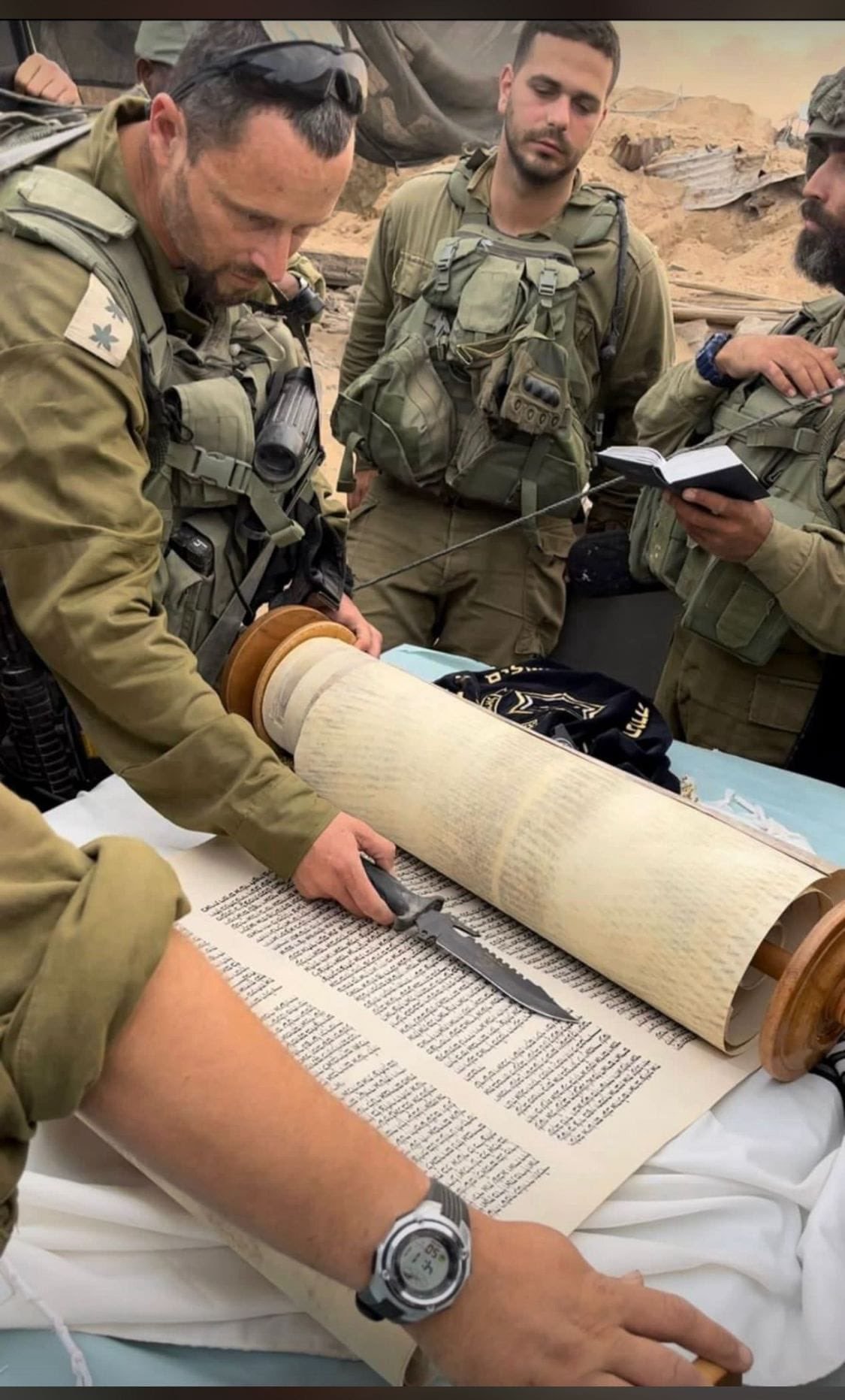
To be clear: Jews do have an unbreakable historical connection to the land of Israel. We also have the right to self-determination. But, for many Jews, this right cannot come at the expense of Palestinian life, dignity, and freedom. Torah teaches that redemption comes through righteousness, lovingkindness, and justice—not conquest. The vision of Zion in our liturgy is one of peace, not blood and soil.
Zionism, as practiced by the Israeli state, stands reality on its head: occupiers become victims, human rights become hate, and ethnic cleansing becomes self-defense. Meanwhile, antisemitism itself is redefined to mean criticism of Israel, thereby making the charge meaningless and rendering real threats to Jewish safety invisible.
The tragedy is not only what Zionism has done to Palestinians, but what it has done to us: turned Torah into a tool of violence, undermined the universalism of Jewish ethics, and sacrificed solidarity on the altar of supremacy.
In 1950, the American Jewish Committee’s Jacob Blaustein, seeking to establish some ground rules in the relationship between the newly formed Israeli state and diaspora Jewry, wrote to Prime Minister David Ben-Gurion, who had assured American Jews that they “owe no political allegiance to Israel”:
To American Jews, America is home. There, exist their thriving roots; there, is the country which they have helped to build; and there, they share its fruits and its destiny. They believe in the future of a democratic society in the United States under which all citizens, irrespective of creed or race, can live on terms of equality. They further believe that, if democracy should fail in America, there would be no future for democracy anywhere in the world, and that the very existence of an independent State of Israel would be problematic. Further, they feel that a world in which it would be possible for Jews to be driven by persecution from America would not be a world safe for Israel either; indeed it is hard to conceive how it would be a world safe for any human being.
Our safety in the diaspora has never been guaranteed by might—it has always been protected by the rule of law, civil society, and democratic norms. When we allow ourselves to become mascots for authoritarian crackdowns and exceptions to liberal principles, we undermine the very structures that have kept us safe. In aiding the dismantling of democracy under the pretense of protecting Jews, we hasten our undoing.
If American Jews want to chart a different course—one grounded in justice, safety, and real solidarity—then we must stop deferring to an unelected establishment that does not represent us. The Conference of Presidents, the Jewish Federations, AIPAC, and similar institutions claim to speak in our name while pushing policies that most of us oppose. They cherry-pick polling data without transparency, elevate the most hawkish voices, and treat dissent as treason.
It’s time to demand democratic accountability from our communal leadership. It’s time to insist that our institutions reflect the breadth and complexity of Jewish opinion—not just the donor class’s agenda. We must pressure these organizations to stop enabling apartheid, stop aligning with white nationalists, and start advocating for policies that reflect our values: justice, equity, and peace for all.
We cannot wait for permission to act. We must organize. We must speak out. And we must build new institutions if the old ones refuse to listen. Because Jewish safety must never come at the expense of others’ freedom—and because any safety built on domination will, eventually, collapse under the weight of its own injustice.


This article is very informative and justifies some of my views. We are all made in the image of GOD. This should be in the forefront of our hearts, minds and practices.